Suspension Work That Restores Ride and Handling Control
Auto Suspension Services in Concord for vehicles showing rough ride quality, handling changes, uneven stance, or abnormal tire wear patterns
Suspension components wear gradually through repeated compression and extension cycles, exposure to road impacts, and corrosion from moisture and road chemicals common during North Carolina winter weather events. TrueLine Fleet Services handles auto suspension services at our shop for drivers in Concord, Harrisburg, Mt. Pleasant, and surrounding areas using the same evaluation approach refined through heavy-duty equipment work where component failure affects load stability and operational safety. Suspension service becomes necessary when you notice harsh ride over road irregularities that were previously absorbed smoothly, the vehicle leans excessively during turns or feels unstable over uneven pavement, one corner sits lower than the others when parked on level ground, or tires develop wear patterns that indicate improper contact angles.
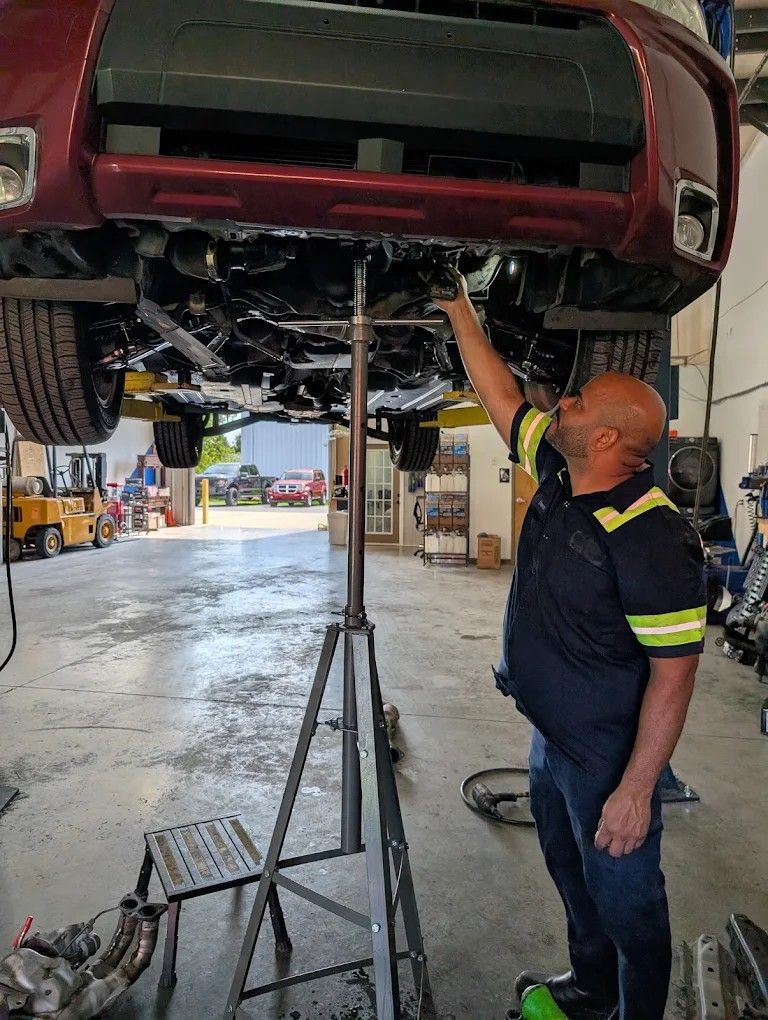
The suspension evaluation measures shock absorber damping performance, inspects spring condition and ride height, checks control arm bushings and ball joint play, examines tie rod ends and steering linkage for excessive movement, and identifies alignment angles that have shifted beyond specification due to worn or damaged components. Concord roads that combine potholes, expansion joints, and debris exposure accelerate suspension wear compared to smooth highway surfaces.
Arrange a suspension evaluation to identify worn components and restore proper vehicle control.
What Changes After Suspension Repair Completes
Suspension repair begins with replacing components that have failed or exceeded their wear limits, then proceeds to alignment correction once the suspension geometry can be properly adjusted. Worn shock absorbers are replaced to restore damping control, weakened springs are changed to recover ride height, bushings and joints showing excessive play are renewed to eliminate unwanted movement, and alignment angles are set to manufacturer specifications so tires contact the road evenly across their width.
After suspension work is finished, the vehicle absorbs road surface variations without transmitting harsh impacts to the cabin, steering response becomes predictable without wandering or requiring constant correction, body roll during cornering is controlled within normal limits, and tires wear evenly across the tread surface rather than showing feathering or edge wear. The difference becomes immediately apparent during the first drive when handling behavior returns to stable and composed operation.
Alignment service is only effective after worn suspension components are replaced, since excessive play in joints or bushings prevents accurate angle adjustment and causes rapid alignment drift. The sequence of component replacement followed by alignment ensures that corrections remain stable rather than shifting back out of specification as soon as the vehicle returns to normal use.
What Drivers Usually Ask About Suspension Work
Vehicle owners in Concord frequently ask how to recognize suspension problems, what causes component wear, and how repairs restore safe handling characteristics.
What causes shock absorbers to fail over time?
Internal seals wear and allow hydraulic fluid to leak past the piston, which reduces damping force and lets the suspension oscillate excessively after encountering bumps rather than settling quickly.
How does suspension condition affect tire wear?
Worn components allow the tire to contact the pavement at incorrect angles, causing accelerated wear on one edge, feathering across tread blocks, or cupping patterns that require premature tire replacement.
When should suspension components be inspected?
Evaluation is warranted when ride quality deteriorates, handling feels loose or unpredictable, the vehicle sits unevenly, steering response changes, or tire wear patterns suggest alignment problems that may result from worn suspension parts.
Why do control arm bushings wear out?
Rubber bushings degrade from repeated flexing, exposure to heat from braking components, contamination from road chemicals, and age-related hardening that eventually leads to cracking and separation from the metal sleeve.
What happens if suspension repairs are deferred?
Continued operation with worn components accelerates tire wear, places additional stress on adjacent suspension parts, reduces vehicle stability during emergency maneuvers, and can allow metal-to-metal contact that causes more extensive damage.
TrueLine Fleet Services brings heavy-duty suspension experience to passenger vehicle work, ensuring that evaluation and repair address the underlying wear condition rather than adjusting around failing components. Call (980) 556-0576 to schedule suspension service and restore predictable vehicle handling.