Service Built Around Working Trucks
Heavy Duty Truck Fleet Services in Concord for commercial fleets, owner-operators, and transportation companies
Commercial trucks must remain safe, dependable, and productive regardless of load schedules, route conditions, or daily use demands. TrueLine Fleet Services has specialized in heavy-duty fleet service for more than 24 years, providing diagnostics, preventative maintenance, brake service, brake replacement, suspension repair, and precision alignment for fleets and owner-operators working in and around Concord, Mt. Pleasant, Kannapolis, and surrounding areas.
Fleet service centers on keeping working trucks operational by addressing brake wear before it affects stopping distance, identifying suspension issues before they lead to uneven tire wear or alignment drift, and maintaining systems that handle the weight and duty cycles these vehicles experience daily. Preventative maintenance intervals are based on mileage, operating conditions, and inspection findings rather than fixed schedules, which means service recommendations reflect actual wear patterns instead of generic timelines.
Request a fleet service quote to discuss maintenance schedules for your trucks.
What Heavy-Duty Specialization Includes
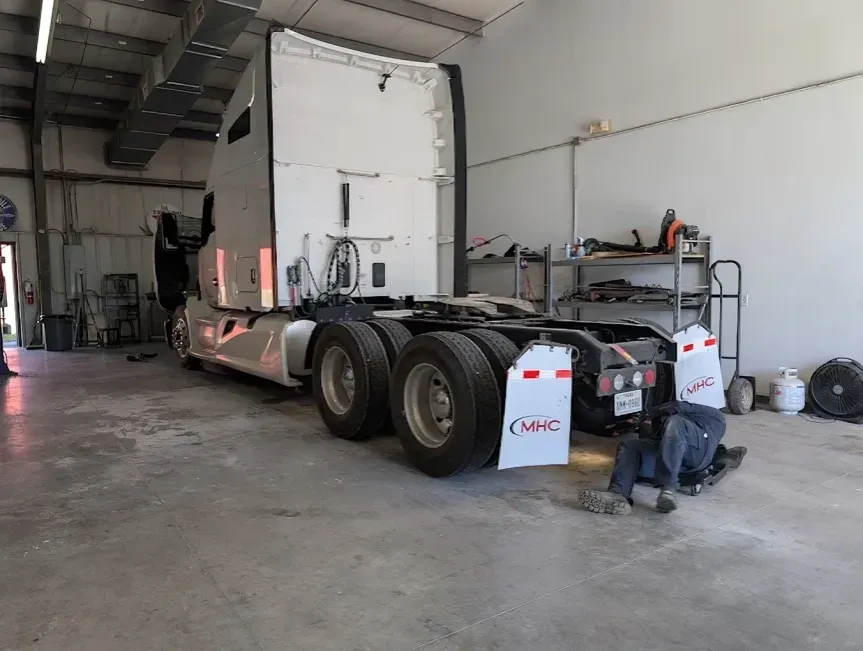
Heavy-duty service requires familiarity with air brake systems, suspension components designed for high gross vehicle weights, alignment specifications that differ from light-duty vehicles, and diagnostic systems specific to commercial truck platforms. TrueLine's experience includes working with drum and disc brake assemblies, slack adjusters, air dryers, leaf spring and air suspension systems, king pins, and steering linkages that operate under loads and conditions passenger vehicles never encounter. This background shapes how problems are diagnosed and how repairs are prioritized.
After service is completed, trucks stop consistently without pull or fade, suspensions absorb road impacts without bottoming out or causing instability, alignments remain stable under loaded and unloaded conditions, and routine inspections pass without requiring emergency corrections. Drivers notice improved handling, reduced tire scrubbing, and fewer unexpected repair needs during operation. Fleet managers see fewer breakdowns, more predictable maintenance costs, and trucks that remain available for scheduled routes.
Service intervals depend on how the truck is used, what loads it carries, and what conditions it operates in. Long-haul trucks, local delivery vehicles, and trucks operating in construction or industrial environments each generate different wear patterns, and maintenance schedules adjust accordingly to match actual usage rather than calendar dates alone.
What Fleet Operators Want to Know
Transportation companies and owner-operators in Concord often ask how heavy-duty service differs from light-duty work, how quickly repairs can be completed, and what maintenance schedules make sense for their operations. These answers address those concerns.
What makes heavy-duty fleet service different from standard auto repair?
Heavy-duty trucks use air brake systems instead of hydraulic brakes, suspension components rated for significantly higher loads, and diagnostic protocols specific to commercial platforms, which means service requires different tools, procedures, and experience than passenger vehicle work.
How does on-site service work?
On-site service allows a technician to travel to your location for inspections, minor repairs, or maintenance that doesn't require lift equipment, which reduces downtime when a truck develops a problem during a route or at a loading facility.
When should preventative maintenance be scheduled?
Preventative maintenance should be scheduled based on mileage intervals, inspection findings, and operating conditions rather than waiting for problems to appear, because routine service identifies developing issues before they cause breakdowns or safety concerns.
What does brake replacement on a heavy-duty truck involve?
Brake replacement includes inspecting drums or rotors for wear or heat damage, replacing shoes or pads, adjusting slack adjusters to maintain proper clearance, and testing the air system to confirm consistent pressure and release across all wheel positions.
Why does alignment matter for commercial trucks?
Proper alignment prevents uneven tire wear, reduces steering effort, and maintains stability under load, which extends tire life, improves fuel economy, and prevents handling problems that affect driver safety and vehicle control.
TrueLine Fleet Services has provided heavy-duty truck service to Concord fleets and owner-operators for more than two decades. Call (980) 556-0576 to schedule fleet service or discuss maintenance plans for your working trucks.