Accurate Troubleshooting for Commercial Vehicles
Heavy Duty Truck Diagnostics in Concord for performance, braking, suspension, alignment, and drivability concerns
Commercial trucks develop problems that affect braking performance, suspension response, alignment stability, or overall drivability, and identifying the source of these concerns requires systematic testing rather than assumptions based on symptoms. Heavy-duty truck diagnostics isolate faults by testing air brake pressure delivery, measuring suspension component play, checking wheel alignment angles under load, and retrieving fault codes from the vehicle's electronic control systems. TrueLine Fleet Services uses this process to help fleet managers and owner-operators in Concord, Mt. Pleasant, Kannapolis, and surrounding areas make informed repair decisions based on confirmed failures rather than guesswork.
Diagnostic work begins with understanding what the driver or operator observed: whether the truck pulls during braking, whether the suspension bottoms out or causes handling instability, whether tire wear appears uneven or accelerated, or whether warning lights indicate faults in the engine or emissions system. Testing then confirms whether the problem stems from a specific component, a system-wide issue, or multiple failures that need to be addressed in sequence to restore reliable operation.
Schedule truck diagnostics to identify the source of braking, suspension, or drivability concerns before committing to repairs.
How Testing Reduces Guesswork
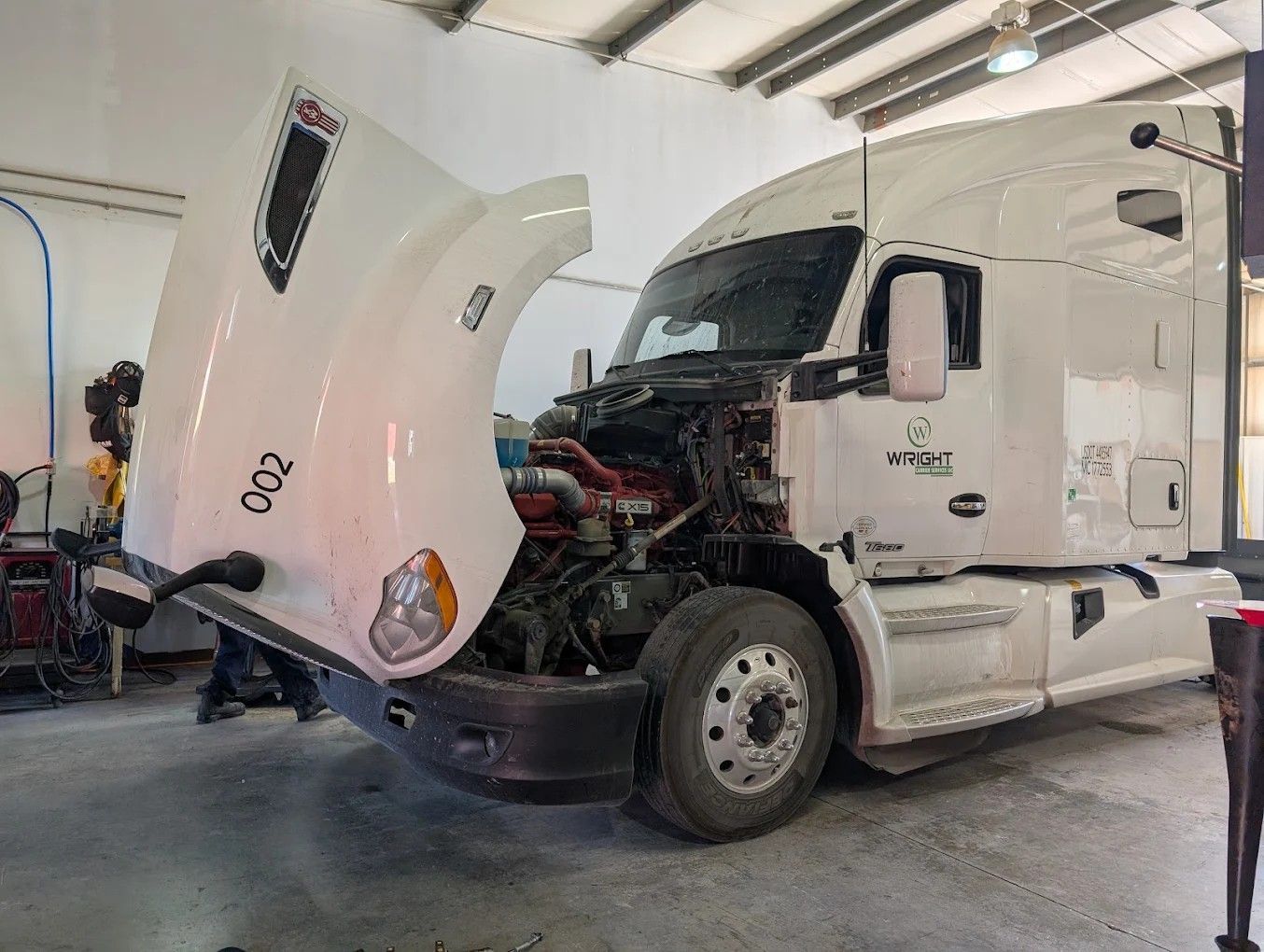
Heavy-duty trucks operate under higher loads, longer duty cycles, and more demanding conditions than passenger vehicles, which means failures often involve components that are specific to commercial platforms. Air brake diagnostics measure compressor output, governor cutoff pressure, and brake chamber actuation to determine whether problems result from air delivery issues, mechanical wear, or adjustment errors. Suspension testing checks bushing condition, spring integrity, and shock function to identify what's causing noise, instability, or uneven tire contact. Alignment diagnostics compare measured angles to manufacturer specifications and assess whether deviations result from component wear or collision damage.
Once the diagnostic process identifies the failure, repair work addresses the confirmed problem. Braking performance returns to normal with consistent pedal feel and stopping distance. Suspension systems absorb road impacts without excessive bounce or harshness. Alignments hold stable without pulling or wandering. Tire wear patterns stop accelerating, and the truck handles predictably under loaded and unloaded conditions. These outcomes confirm that the diagnosed issue has been corrected and that the truck is ready to return to service.
Diagnostics also reveal whether a concern requires immediate repair or whether it reflects wear that should be monitored during upcoming maintenance intervals. Some findings indicate parts nearing the end of their service life, while others point to failures that need correction to prevent safety risks or further damage to related systems.
Diagnostic Questions Operators Ask
Fleet managers and owner-operators often want to know what diagnostics involve, how long testing takes, and what information the process provides. These answers explain what happens during heavy-duty truck diagnostics.
What does a diagnostic appointment include?
The appointment includes retrieving stored fault codes from the truck's computer, conducting a physical inspection of the systems related to the concern, and performing functional tests to observe how components behave under operating conditions.
How do you diagnose air brake problems?
Air brake diagnostics measure system pressure at multiple points, test governor operation to confirm proper cutoff and buildup, inspect air lines and fittings for leaks, and check brake chamber stroke length to verify adjustment and component condition.
When should diagnostics be performed instead of replacing parts?
Diagnostics should be performed whenever a problem's cause isn't obvious from visual inspection alone, because replacing components without testing often leads to repeat failures or unnecessary expense when the original problem remains unaddressed.
What if the truck has multiple issues?
If diagnostics reveal multiple failures, the findings are prioritized based on safety, operational impact, and whether certain repairs need to be completed before others can be addressed, which helps you decide how to sequence the work.
How does diagnostic work connect to routine maintenance?
Diagnostics often uncover developing issues during troubleshooting that would have been identified during preventative maintenance, which means scheduling regular inspections reduces the likelihood of unexpected breakdowns and diagnostic appointments prompted by sudden failures.
TrueLine Fleet Services has provided heavy-duty diagnostics and repair service in Concord for more than 24 years. Call (980) 556-0576 to arrange diagnostic testing for your truck and receive clear answers about what needs attention.